As One
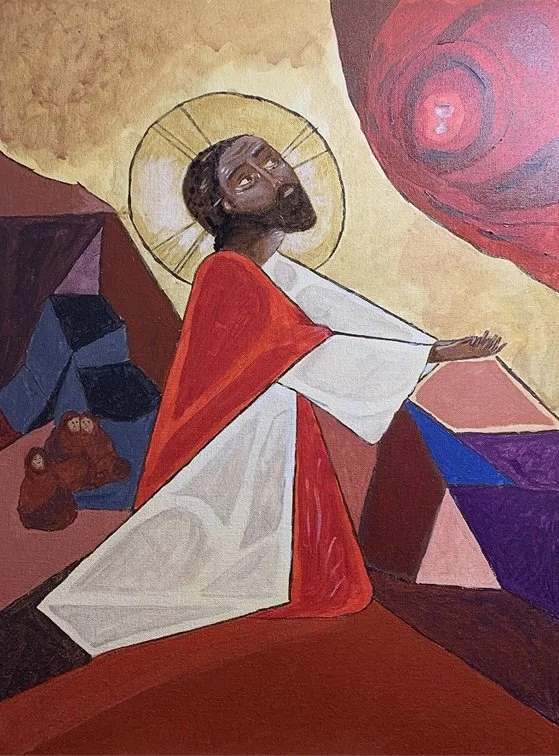
John 17:1-11
After Jesus had spoken these words, he looked up to heaven and said, “Father, the hour has come; glorify your Son so that the Son may glorify you, since you have given him authority over all people, to give eternal life to all whom you have given him. And this is eternal life, that they may know you, the only true God, and Jesus Christ, whom you have sent. I glorified you on earth by finishing the work that you gave me to do. So now, Father, glorify me in your own presence with the glory that I had in your presence before the world existed.
“I have made your name known to those whom you gave me from the world. They were yours, and you gave them to me, and they have kept your word. Now they know that everything you have given me is from you, for the words that you gave to me I have given to them, and they have received them and know in truth that I came from you, and they have believed that you sent me. I am asking on their behalf; I am not asking on behalf of the world but on behalf of those whom you gave me, because they are yours. All mine are yours, and yours are mine, and I have been glorified in them. And now I am no longer in the world, but they are in the world, and I am coming to you. Holy Father, protect them in your name that you have given me, so that they may be one, as we are one.
As we come to the end of Jesus’ farewell discourse in the gospel of John, there’s a couple important bits of context that I haven’t quite fit into the last two sermons on the beginning of the farewell—and that has to do with the time in history in which this particular gospel was written. The synoptic gospels, Matthew, Mark, and Luke, were all informed by one another, and compiled and written in the immediate aftermath of the ministry, death, and resurrection of Jesus… John was written decades later. This explains how different John is from the other three gospels, and it also explains the fact that there was less of an emphasis on the second coming of Christ. The second coming is something that is still debated today—this promise that Jesus will come back, and create a heaven on earth, or bring us all up to heaven, or so many other interpretations and predictions. It’s not something we tend to think about much in mainline protestant churches, it’s certainly not something we, the mainline church as a whole, emphasize very much. I think it’s one of those things that’s been sort of coopted by more zealous denominations and sects; I think, unfortunately, when we think of the second coming, we tend to think of the book of Revelation, the apocalypse, the so-called rapture… so it might be helpful to use the book of John to help make sense of it for us.
You see, after Jesus was resurrected and after he ascended, many, most, really, early Christian believed the second coming was imminent. So as time went on and nothing was happening, people got more and more discouraged, more and more cynical. There were arguments and schisms… many of Paul’s letters to various Christian communities, in fact, was encouraging them amidst worries and frustration that heaven on earth just didn’t seem to be coming. So when John wrote his gospel, the idea of the second coming was much more ambiguous, much more enigmatic. And despite this, despite John’s mysticism and esoteric writing, his idea of the a second coming, of eternal life, is almost paradoxically very grounded—grounded in the present day, and how to be a good disciple in the world: “And this is eternal life, that they may know you,” says Jesus in verse 3, in his petition to God. Knowing God, knowing Christ, knowing the Spirit… this is eternal life. We already have it. It’s already available. It’s here on earth, with us, for us, if only we accept it and use it correctly. We can still believe in a second coming, we can, and we must, still work to make this world worthy of Christ’s return (and just as a quick aside, that’s my theology—that a second coming won’t happen until we, as a people together, united as one, create an earth as it is in heaven worthy of our savior’s return), but in the meantime, we can also find utter joy in this broken world thanks to the gift of the Spirit Christ left us with, and also with the gift of being in community and oneness together. We can experience a bit of eternal life by taking part in a community in Christ, we can get a preview of an earth as it is in heaven now, by allowing ourselves to be guided by the Spirit.
So that’s the first bit of important context. The second is what I see as a kind of a troubling big elephant in the room, that’s been a common thread throughout these passages—and it’s this inference of exclusivity, this notion of receiving salvation only through very specific means, and only for a small group of people. Last week Jesus said to his disciples,
“In a little while the world will no longer see me, but you will see me; because I live, you also will live.” The world will not see Jesus, but the disciples will… this goes with John’s penchant for figurative language when it comes to seeing and knowing, but it also sets up a strange kind of us vs. them dichotomy, disciples vs. the world. And then the week before, Jesus clearly stating, “I am the way and the truth and the life. No one comes to [God] except through me.” Now, as someone who believes in some version of universal salvation, this kind of language is always troubling to me… after all there are the eternal questions of what happens to the kindest person halfway across the world in a remote and isolated area who’s never heard the name Jesus before? Do they not get to experience the kingdom? I don’t have any definitive answers, I’ll never pretend to, but I can tell you I don’t believe that would be the case. And this week, in verse 9, Jesus says directly to God, “I am asking on their behalf; I am not asking on behalf of the world but on behalf of those whom you gave me, because they are yours,” as if he’s leaving the rest of the world on, and only praying for the disciples.
What I believe, when it comes to this farewell discourse, is that Jesus is having a serious, loving, and deeply intimate conversation with his closest friends, and in today’s passage, with God. Chapters 14-17 don’t really concern the rest of the world. It’s preparation for how his closest confidants, his beloveds, will spread the good news, and, most importantly, will stick together through thick and thin. That’s the crucial part of this farewell discourse. Jesus is preparing to leave for the foreseeable future. There remains the promise of possibility that he’ll return someday, but John keeps that promise vague and ambiguous; so if Jesus’ work is to live on, the disciples have to band together and do the work. Jesus must be hyper-focused on their understanding, and their ability to love one another as he loves them in order for the rest of the world to really understand this total and unconditional love.
And Jesus had good reason to pray this petition to God—as the Christian faith expanded and spread, growing pains would happen… earlier, I mentioned Paul’s letters to various Christian communities providing encouragement in the face of frustration and disappointment about the second coming, but another recurring theme in his letters was promoting unity among new divisions and disagreements within the communities. In Corinth, in fact, not only were Christians segregating themselves from one another and creating anti-Christian hierarchies, but they were also constantly suing each other amidst disagreements: 1 Corinthians 6:7-8:
…to have lawsuits at all with one another is already a defeat for you. Why not rather be wronged? Why not rather be defrauded? But you yourselves wrong and defraud—and brothers and sisters at that.
He’s scolding the believers of Corinth for not turning the other cheek, and for not figuring things out amongst themselves. This is the exact thing Jesus feared—his people turning against each other, eating their own, as we might say today. And some of this is natural—as I said before, growing pains will happen. But you have to stop this kind of division in its tracks, you have to do some mediation before it gets out of hand. And I wonder if this is why Jesus, in the farewell discourse is solely focused on the disciples. For a movement to really grow, you have to start small, and you have to start with a deep understanding. When things expand too quickly, when something grows without a sure foundation, it won’t be able to sustain itself.
And we see this idea and this deeply misguided encouragement of exponential, endless growth caving in on itself today. When we look at the division tearing this country apart, we wonder how was got here, and how it can be stopped. We become overwhelmed and impatient. And we become discouraged and we despair. We want more, more, more, without thinking of the ramifications, without regulations, without testing, without thinking about what huge changes in technology or economics will mean for normal people. Now… let me be clear—I’m as impatient as the rest of us, and this is not an argument for incrementalism—there’s no room for incrementalism with the wealth gap growing and the glaciers melting at the rate they are... but this is an argument for starting small. It is an argument for focusing on what we can control and what we can change. It is an argument for holding strong together, in this small-but-mighty faith community, in this small-but-mighty town, this small-but-mighty state. This sermon is an argument for being together face-to-face, for really listening to one another, and for treating this world and each other, as if this is already an earth as it is in heaven.
Jesus saw the writing on the wall. He knew all too well the faults and sins and lack of understanding that persist among us humans. And so for before he began his march to the cross, he had this deep and intimate conversation, this connection, with his beloveds, knowing they would have to understand and be willing to take up the mantle before things really escalated. “Now they know that everything you have given me is from you,” says, “[so] protect them in your name that you have given me, so that they may be one, as we are one.” In understanding that God, Jesus, and the Spirit are one, the disciples are, in turn, one with one another and one with the Spirit. And this deep understanding allows them to spread the good news in the right way—in a compassionate and loving way, full of great works of justice and healing.
While the world’s problems are different today than they were in the days soon after Jesus’ ascension, the roots are the same… greed, selfishness, arrogance… fear. And so rather than becoming overwhelmed and paralyzed with all that we can’t control, with all that we are powerless to stop in the moment, we can take a cue from these farewell discourses. And we make a real and intentional effort to really connect and encourage one another. We make a real and intentional effort to do what we can in our tiny corner of the country. This is not to say we disregard all that is happening in Iran, in Gaza, in Tennessee, the list unfortunately goes on, but it is today say, when we work together and stay connected and united, this small but mighty congregation, this small but mighty community, can do great things. When we gather together, whether it be here on Sunday mornings, for our monthly community support potlucks, for our Dinner Church, for the roast beef suppers, this list, happily goes on—we are doing the work that Jesus prepped his disciples for, in our own small-but-mighty way. And then, by encouraging each other in these various ways we gather and connect, can then be encouraged to think about how we can build on that radical hospitality that we do our best to exemplify to spread the Good News of Jesus’ radical and unconditional love. Though Jesus is physically absent, though it can seem like the world is crumbling and melting around us, by gathering together, by listening to each other, by breaking bread together, we remain connected and united in spite of differences, because of differences, and we will refuse to give into the disconnection and division and despair that overcomes so many.
“God, protect them in your name that you have given me, so that they may be one, as we are one,” pleads Jesus at the end of our passage today. Jesus wants us to be one as Jesus and God are one. Jesus is inseparable from God, from the Holy Spirit, they are one in the same. And that’s how connected he wants us to be. We’re meant to leave our egos at the door and truly be one with each other. And that may seem like a big ask, but is that really more than what Jesus’ new commandment in in chapter 13 is asking? “Just as I have loved you, should also love one another. By this everyone will know you are my disciples, if you have love for another.”
And so may we remain as one. May we continue to show the world that we are disciples of Jesus by caring and loving one another, by continuing to practice our radical welcoming and hospitality. And may we be encouraged by today’s scripture—encouraged to continue to encourage each other; and may we be encouraged to know that we can have eternal life now, on this planet, on this earth— that we can have an earth as it is in heaven—by working as one body, in the name and in the love of Christ. Amen.
