Don’t You Know Me?
1 John 3:18-22
Little children, let us love not in word or speech but in deed and truth. And by this we will know that we are from the truth and will reassure our hearts before him whenever our hearts condemn us, for God is greater than our hearts, and he knows everything. Beloved, if our hearts do not condemn us, we have boldness before God, and we receive from him whatever we ask, because we obey his commandments and do what pleases him.
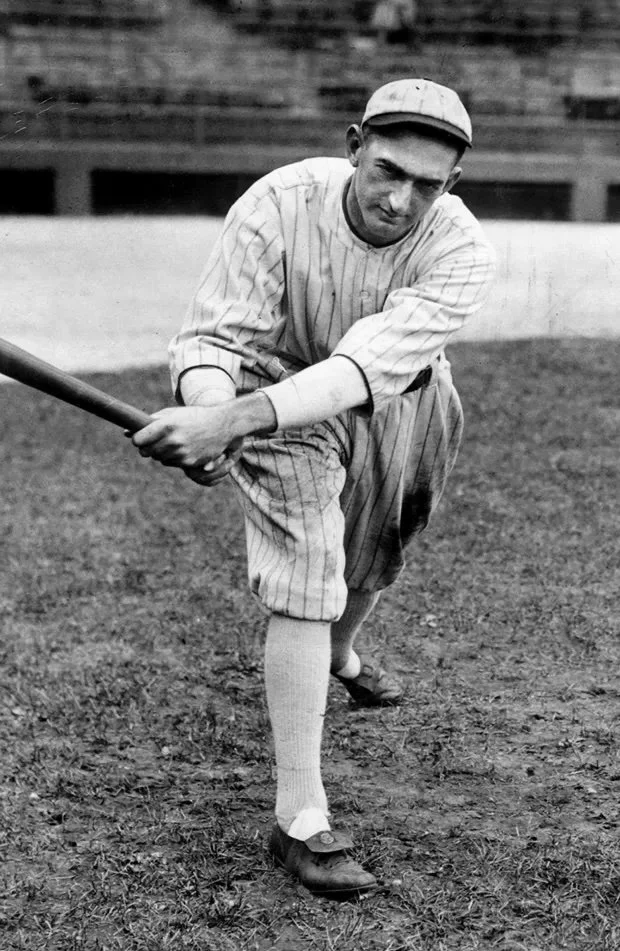
Shoeless Joe Jackson is best known for being one of the best baseball players of all time, but more than that, for being one of the eight Chicago White Sox players who, in 1919, conspired to throw the World Series for a big gambling payout. But there’s a story about Shoeless Joe Jackson, from later in his life, long after he had been banned from major league baseball, that’s always stuck with me. His old friend and fellow major leaguer, the infamous Ty Cobb, walked into Jackson’s liquor store in West Greenville, South Carolina. He walked around the store, made a purchase. He began to walk away when Jackson didn’t acknowledge him, but then turned around and said, “Joe—don’t you know me?” Jackson replied, “Sure I know you, Ty. But I wasn’t sure you wanted to know me. A lot of them don’t.”
No matter how you feel about Jackson’s guilt, this anecdote tugs at the heartstrings—a man who doesn’t believe his old friends want anything to do with him, a man who perhaps doesn’t want anything to do with himself. But it’s also a perfect encapsulation of who Joe Jackson was, in spite of his preternatural talent, in spite of his stats and meteoric rise to baseball fame. He was perpetually unsure, reticent, reluctant. He was someone whose heart, I think condemned him quite a bit, as our scripture passage reads today, and he just never had the boldness that our scripture speaks of to get past that doubt, and I believe that was his downfall.
Shoeless Joe Jackson was born in poverty in South Carolina in 1887, the son of a sharecropper. By the time he was around 7-years-old, he was already working 12-hour shifts as a mill hand in the town’s textile mill. His family’s poverty meant that he didn’t have the option of any kind of real education, and it’s now become a widely known fact that he was functionally illiterate. Later in life, during his baseball career, his wife would be the one to read, approve, and sign all… or most of his contracts.
But it was at the textile mill that he began playing baseball on the mill’s official team, and where he would eventually be scouted for the big leagues. Jackson is of course known primarily for being on the Chicago White Sox and the 1919 Black Sox scandal, but he started with the Philadelphia Athletics, and it was not an easy transition for him. Jackson has several false starts—first, after boarding the train in Greenville SC to go to Philly, he panicked 150 miles into the journey and got off in Charlotte NC and turned right around to get a southbound train back to Greenville. After that, Connie Mack, the Athletics’ manager, sent an injured Athletic outfielder down to Greenville to escort Joe back himself. It took a long time, but eventually Jackson boarded a train to Philadelphia and actually made it—but not for long. Though he had a decent start in the big leagues, he was bullied and hazed by his teammates—it’s unclear is this was just part of the culture in these days, or if they were jealous of all the praise and publicity, he was getting, but whatever it was, it was too much for Joe. After just a few games, he left in the night for another train back to Greenville. He was convinced to come back, but after an abysmal showing, going 0 for 9 in two games in Boston, he hightailed it back to Greenville once again.
It was reported by friends that he had, indeed expressed hesitations about going up to those big northern cities. It was also reported that his teammates bullied him for his illiteracy and his country ways. Maybe the pressure was just too much for him—no other rookie had gotten as much hype has Joe Jackson had. And it wasn’t that he couldn’t live up to that hype— until those games in Boston, he was playing great, and was immediately a fan favorite. But it struck me in reading about his life that he was just never sure enough of himself. It’s one thing to be humble vs. arrogant—but it’s another to be this unsure, this reluctant. Ultimately, in spite of his talent, to his great disappointment, Connie Mack had no other option but to send Jackson back to the minors and let him go for good, and Jackson was glad. He played for the New Orleans Pelicans, before returning to the majors in Cleveland for a few seasons—and though he made it this time, it wasn’t without first being quoted that he would have preferred to stay in New Orleans rather than gaining money and fame up north. And just as he and his wife Katie were getting used to Cleveland, in 1915, he was traded to the Chicago White Sox—the last major league team he would ever play for.
Over the past few decades, Jackson’s legacy has become complicated by different portrayals in the media—the movies Field of Dreams and Eight Men Out, for example, paint Jackson in a very generous light, as a country bumpkin who was taken advantage of, as a simpleton who didn’t understand what he was doing. This seems to be only somewhat true. A few years ago, the attorney and baseball historian Bill Lamb did an extensive forensic analysis of newspaper articles and court documents. Jackson’s involvement in the 1919 World Series fix was not one born wholly of ignorance, nor was he a ringleader— it seems, as in other times in his life, he just didn’t know what to do. The mostly accepted parts of the history are this: he was approached by teammate Chick Grandil, and ornery, disgruntled, not well-liked White Sock, with a proposition to throw the World Series for 10k, which Jackson declined. Grandil approached him again later, offering him 20k. It’s reported he reluctantly agreed to this. At some point during the Series, fellow conspirator Lefty Williams threw an envelope with 5k in it to Jackson. He took it. Those are pretty much undisputed facts. The rest of it gets foggy, because Jackson’s story changed a lot over the next few years. It seems that soon after the Series, when rumors were spreading, Jackson’s conscience got the better of him, and he went to confess. Comiskey, the White Sox cheap and cruel owner, ignored Jackson when Jackson tried to tell him. Then, in 1920, Jackson testified under oath for a grand jury in quite some detail—that he agreed to 20k to be “split some way,” that he took the 5k, (and that his wife Katie was not happy about it); he gave details on the other conspirators; he claimed he didn’t actively play poorly (and he didn’t his stats are pretty incredible) in the Series, but that he maybe didn’t play his absolute hardest.
But not long after his detailed confession, Jackson started denying that he ever confessed, that he ever even knew anything about fixing the World Series. This led to a perjury trial in which Jackson, even after hearing his words from the grand jury testimony read back to him, verbatim, denied ever saying anything he was documented to have said and completely changed the timeline of being given the $5,000.
But the damage had, of course, been done. Jackson would never again play in the major leagues; he would never be inducted into the Baseball Hall of Fame. He maintained his innocence for the rest of his life, but never went into any more detail about the particulars of the scandal. His main piece of evidence was to look at his World Series stats, which were, indeed remarkable— but it’s believed by many they could have been even better.
Now… what to make of all this? What to make of this, by all accounts, kind and soft-spoken man from rural South Carolina, who happened to be a once-in-a-generation talent, throwing the World Series, and then confessing, perjuring himself by taking the confession back, and going on to lead a quiet life back in the South? Well, at the end of one of the last interviews he ever did, at the age of 61 (he died at 64), he says this:
Well, that’s my story. I repeat what I said when I started out — that I have no axe to grind, that I’m not asking anybody for anything. It’s all water over the dam as far as I am concerned. I can say that my conscience is clear and that I’ll stand on my record in that World Series. I’m not what you call a good Christian, but I believe in the Good Book, particularly where it says, “what you sow, so shall you reap.” I have asked the Lord for guidance before, and I am sure He gave it to me. I’m willing to let the Lord be my judge.
As lovely a sentiment as this is, I believe, that once again, Jackson isn’t being fully honest here. “…let us not love in word or speech but in deed and in truth. And…we will reassure our hearts before him whenever our hearts condemn us, for God is greater than our hearts, and he knows everything.” I just don’t believe Jackson really believed what he’s saying about the Good Book here, because I don’t believe that Jackson ever stopped condemning himself, ever stopped condemning his own heart. I just don’t believe that he ever truly confronted what he did, and in turn, could not forgive himself for what he did. I think he spent the rest of his life professing his innocence because he was trying to believe it himself. But we can’t feel that God-given unconditional love, forgiveness, or support if we can’t “love in deed and truth.” Jackson wasn’t living in the full truth—because of shame, or embarrassment, or anger, we’ll never know. But he wasn’t living in the truth we are all called to live and love into.
Now, even if I don’t buy the more popular, attractive stories that Joe Jackson was a just a country bumpkin who didn’t know better, that he was wholly innocent, that doesn’t make him less of a tragic character… in fact, I think it makes him more tragic. I think Jackson was a man who wrestled with his demons his entire life. From his initial nerves and reticence at even taking the opportunity to head north to the big leagues, to the temptation of that big payout. I think he was someone who was born in abject poverty, who was born with a gift, and who got the opportunity of a lifetime, who didn’t know quite what to do with it or how to handle it. I think he was a man who professed to believe in God and the Good Book, as he says, but couldn’t quite go all in enough to trust in God to do the right thing and reject the gambling proposition altogether… just like he nearly couldn’t trust in himself to even make it up north to the majors… just like it seems that he couldn’t even go all in on throwing the World Series, considering his numbers in that series were still pretty incredible… and in the end, he couldn’t go all in on telling the full truth and freeing himself.
God forgives us and loves us no matter what. But we can’t fully grasp that forgiveness and that love if we can’t forgive or love ourselves. If we’re constantly beating ourselves up for mistakes we’ve made, or for not being what we perceive as good enough, if we’re constantly condemning ourselves, we won’t have that boldness before God, and we won’t be able to feel that love that’s always there, no matter how much we may stray.
Joe Jackson’s story isn’t just a cautionary tale of greed or gambling. It’s not just a cautionary tale of literacy and general wherewithal. Rather, it’s one of confidence and of faith—humble confidence in each of our own abilities, gifts, and talents—because we all have them; and faith that our God knows our hearts, and we must therefore be always honest with ourselves before our all-loving and forgiving God.
My heart breaks whenever I think of Jackson saying to his friend, “I wasn’t sure if you wanted to know me.” That quote speaks louder than any confession or profession of innocence. Jackson wasn’t sure if Ty Cobb wanted to know him because Joe Jackson didn’t really know, or love himself. I believe Jackson went to the grave condemning his own heart, and that is the real tragedy of his story.
And so may we confront our own mistakes with boldness. May we do the work to better ourselves before one another and before God. May we live and love in good deeds and in truth, always. And may we live knowing that those around us want to know us, as God knows us, and as God always loves us. Amen.
Work cited:
Gropman, Donald. 1999. Say It Ain’t so, Joe!: The True Story of Shoeless Joe Jackson. Citadel Press.
https://sabr.org/journal/article/an-ever-changing-story-exposition-and-analysis-of-shoeless-joe-jacksons-public-statements-on-the-black-sox-scandal/
https://sabr.org/journal/article/an-ever-changing-story-exposition-and-analysis-of-shoeless-joe-jacksons-public-statements-on-the-black-sox-scandal/
