Matthew 23:1-12
Then Jesus said to the crowds and to his disciples, “The scribes and the Pharisees sit on Moses’s seat; therefore, do whatever they teach you and follow it, but do not do as they do, for they do not practice what they teach. They tie up heavy burdens, hard to bear, and lay them on the shoulders of others, but they themselves are unwilling to lift a finger to move them. They do all their deeds to be seen by others, for they make their phylacteries broad and their fringes long. They love to have the place of honor at banquets and the best seats in the synagogues and to be greeted with respect in the marketplaces and to have people call them rabbi. But you are not to be called rabbi, for you have one teacher, and you are all brothers and sisters. And call no one your father on earth, for you have one Father, the one in heaven. Nor are you to be called instructors, for you have one instructor, the Messiah. The greatest among you will be your servant. All who exalt themselves will be humbled, and all who humble themselves will be exalted.
We’re starting right where we left off last week—Jesus has just shocked the Pharisees into silence with this authority and readings of the scriptures; he’s made it clear that the most important commandments are loving God and loving your neighbors as yourselves; and at this point, he’s had enough. He’s at the end of his rope. He’s tired of the hypocrisy and abuses of power on the part of the powerful Pharisees. The entirety of chapter 23, in fact, is an angry rant against the power and status-hungry religious and political authorities.
But to begin his diatribe, Jesus pulls a bit of a bait and switch. He very diplomatically begins by stating that the scribes and Pharisees sit on Moses’ seat, which is his way of saying they have true knowledge and authority to teach the scriptures and the laws; he continues to even say that what they preach and teach, should, indeed be followed… but then: “…do not do as they do, for they do not practice what they teach.”
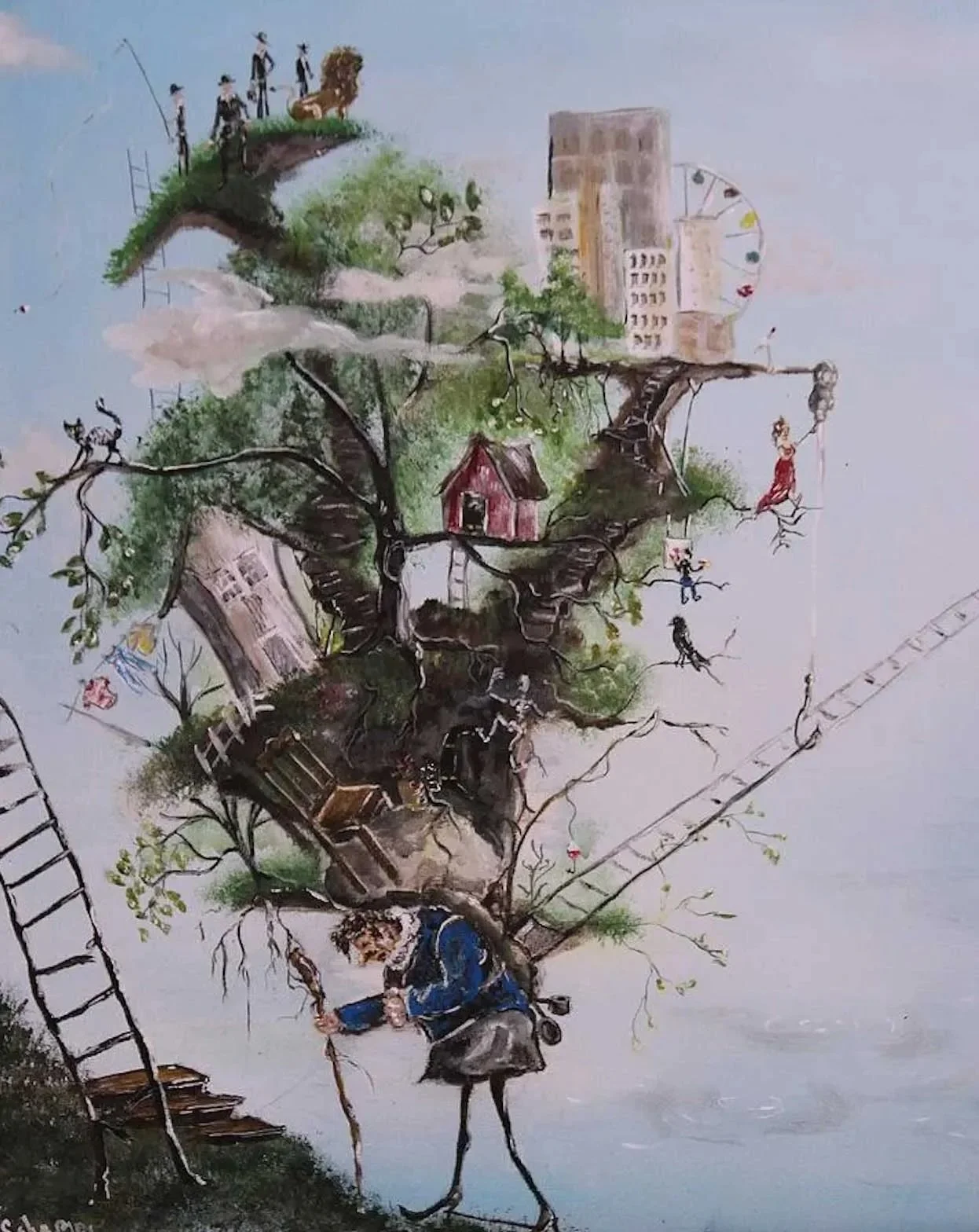
He goes on to decry how the religious authorities show off their fringes, and their phylacteries, as if having fancy ones makes them holier than your average citizens; that they care more about having the best seats at decadent meals with powerful politicians and citizens than they care about humbly serving their God; that they care more about fancy titles and superlatives than they do about the actual people they are called to serve. But the thing that stuck out to me more than any of these other scoldings is the first one of this passage: “They tie up heavy burdens, hard to bear, and lay them on the shoulders of the other, but they themselves are unwilling to lift a finger to move them.”
Immediately after our passage today, Jesus beings his seven woes—and he begins them by saying, (and I quoted this last week too), “Woe to you, scribes and Pharisees, hypocrites! For you…have neglected the weightier matters of the law: justice and mercy and faith.” The Pharisees were prioritizing and enforcing punitive and harsh laws, rather than the ones that matter. This is what Jesus means when he says that they’re giving “heavy burdens” to the “other” while not helping them at all. They’re using the Torah as a form of hardship, so they have justification to punish and oppress those under them, as opposed to something sacred and helpful.
But something that we Christians may not realize when we read that line about heavy burdens in relation to the laws being carried out is this: The Torah, the Jewish law of Jesus’ day was never supposed to be a burden. It was, and is to this present day, to our Jewish siblings, a blessing, something to make life make sense, something to make life easier. So this is a scathing indictment of the Pharisees on the part of Jesus—because he’s not only saying that they’re unjustly burdening the people they’re supposed to serve with these more minor laws, but they’re also completely doing wrong by their own sacred texts, by turning what is supposed to be a blessing to people into a burden. They’re turning a blessing into a curse. They’re turning God’s word, their all-loving God’s word, into something scary, something cruel.
Now, Jesus never goes into detail about what laws they’re emphasizing above others, or what kind of punishments they may be carrying out. But remember last week, in addition to our gospel reading from Matthew, we read the Torah passage from Leviticus that Jesus quotes, which ended with Leviticus 19:18: “…you shall love your neighbor as yourself.” At Bible study, Caroline mentioned that out of curiosity, she took a look at the rest of the laws and ordinances in Leviticus, and noted that there was an absolutely overwhelming amount of them; and some of them are wildly specific. It’s easy to see how someone who’s working in the fields all day might miss a command or two; it’s easy to see how someone who’s gleaning the fields and desperate for money to feed their families might slip up every now and then. And so, it’s easy to see how an authority figure on a power trip, without the public’s best interests in mind could take advantage of this. And when this happens, what do the sacred scriptures become to the little guy? To the everyday person? To the person without any wealth or leverage, just trying to survive? The laws, the scriptures become a burden, a curse, rather than the blessing they are meant to be.
Matthew 11:28-30:
Come to me, all you who are weary and carrying heavy burdens, and I will give you rest. Take my yoke upon you, and learn from me, for I am gentle and humble in heart, and you will find rest of your souls. For my yoke is easy and my burden is light.”
And today, 12 chapters later, we have Jesus calling out those who are foisting those burdens upon those who want nothing but a lighter load; a little rest; a simple and comfortable life. Jesus offers this blessing as an antidote for the burdens of this broken world… a world in which the laws and the scriptures will no longer be burdensome to anyone… a world in which mercy, faith, and justice are prioritized above all else, and will therefore be blessings to all people.
But as we sit here at the end of 2026, thousands of years after Jesus was on this earth, and who knows how many years before his kingdom of peace comes on this earth, what can we do to lighten the load for our neighbors? What can we do to lessen the burden? What can we do to be a blessing in the world? What can we do today, to “do justice, love kindness, and walk humbly with [our] God” as the prophet Micha says.
Well, in just two days, we’ll get the chance to vote in the midterm elections. I’m not here to tell you who to vote for (that would be illegal and immoral). But as Americans it’s our civic duty to vote. And as Christians, it’s our sacred duty to vote in a way that Christ would approve of. It’s our scared duty to vote in a way that we truly believe will lighten the loads and lift the burdens of our neighbors. It’s our sacred duty to vote in a way that will be a blessing to people, not a curse. And I know there are some people wondering why I’m bringing up politics up here at the pulpit, but for those who think that way, I would ask you to try to reframe that a little. I’m not talking about politics up here. I’m talking about our faith. I’m talking about being guided by that faith. Maybe you’re guided by a righteous anger right now like Jesus’ in our passage today. Maybe you’re guided by a longing for the peace and unity our faith teaches us. Maybe you’re guided by the concept unconditional love and loving all God’s children that our faith teaches us. Maybe you’re guided by the wisdom given to us by the Holy Spirit, and you want to spread the wisdom any way you can.
Everything feels so heavy these days. We don’t have to be so naïve to believe a single vote will change the world, or that any charismatic, smooth-talking politician will save us. But we can use our faith and discernment and think about how the choices we make on Tuesday, and beyond, might move to make the load a little lighter for our neighbors; that our choices might help to turn the tide from the policies and laws coming from on high may be less of a burden to the everyday person.
“Call no one your father on earth, for you have one Father, the one in heaven,” Jesus says—a very subversive comment. But I think when we’re thinking about how to be Christians in the world, in this world in which we’re inundated by politics, we can try to think this way for a minute. Because in addition to this subversive command to disregard familial ties and obligations, we are called to humble ourselves. So if we go into the voting booth thinking of God, Christ, and the Holy Spirit as our ultimate authority; and if we can humble ourselves enough to think about how to lighten the burdens of not ourselves, but rather our neighbors, since we are first and foremost called to love God and love our neighbors as ourselves, I think we will find that we know who vote for. I think we can vote with a clear conscience.
Of course, that’s only one small (but possibly powerful) way to be a blessing, rather than a burden in the world—I only focused on it this morning because election day is right around the corner. There are a million ways for us to act our faith out in the world, to help and love our neighbors as ourselves. I’m going to quote part of our prayer of invocation last week, which was a different blessing by Kate Bowler:
God, give us the good, inconvenient work of love.
Link our lives to others so that their worries become our own.
Give us tasks we don’t want that will ease the burdens of our neighbors.
Divert us from the plans we’ve made to get from point A to point B
when you have better ideas.
Put our hands to work with generous hearts,
and let the dreams of others drift into our own.
You’ve given us the tools and ideas that will bring us
neither recognition, money, or praise…
But there’s a push and pull here, right? That we are called to do the sometimes inconvenient, often difficult work of love; that we’re called to, in a way, burden ourselves, and yet, we don’t want anyone to be burdened. Jesus tells us he’s gentle and his burden is light; but he never tells us the work we have to do in his name will be easy. “The greatest among you will be your servant. All who exalt themselves will be humbled, and all who humble themselves will be exalted,” Jesus says. By serving others, we unburden ourselves. When we’re working for an earth as it is in heaven, we know we’re practicing the call of Christ which frees all people. In a world of that seems to be run by the contradictory principles of both convenience and scarcity, giving up any of our time or our resources can feel difficult, sometimes impossible— it’s all too easy to hunker down in our homes and try to block everything out; it’s all too easy to give into our culture of individualism and taking what’s ours and not branch out to our neighbor, and not even think about the needs of others.
But here is one of the handful of times in which Jesus is not cryptic. He’s not tip-toeing around what he thinks of the powerful. He’s not speaking in riddles. Rather, he’s clearly calling out hypocritical, dangerous, cruel behavior; behavior that is sadly relevant and familiar to us; we see on our TVs and read about constantly these days, especially during election cycles. And Jesus is telling us, plainly, this is wrong. Jesus is telling us that our faith calls us to take away the burdens of the heavy-laden, not to ignore them, and in turn, make them heavier. Jesus is telling us to be a blessing. And to be a blessing, we must serve others. And one way to do that is, on Tuesday, to vote as a servant. We must act a servant every day—realize that none of us are above anyone else, we are all brothers and sisters, as Jesus says.
Everything is just so heavy now. None of us want to feel that weight. We can lift it by being a blessing—by humbling ourselves and serving others, in the voting booth, and in our everyday lives. Our faith is one of humility, of service, and of lightening the load for others. If we were to all live by those principles, everyone’s yoke would be forever easy; everyone’s burdens forever light. So in this world that makes living that way nearly impossible, may we resist, and do it anyway. And may we always be a blessing. Amen.
