God is Not a Secret
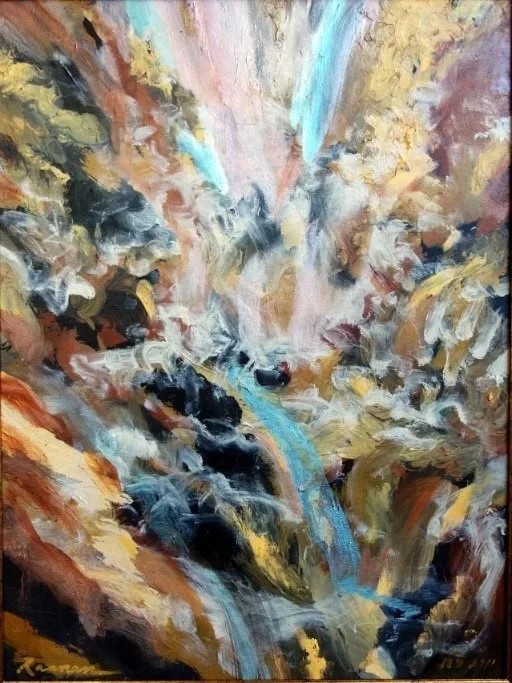
Exodus 17:1-7
From the wilderness of Sin the whole congregation of the Israelites journeyed by stages, as the Lord commanded. They camped at Rephidim, but there was no water for the people to drink. The people quarreled with Moses and said, “Give us water to drink.” Moses said to them, “Why do you quarrel with me? Why do you test the Lord?” But the people thirsted there for water, and the people complained against Moses and said, “Why did you bring us out of Egypt, to kill us and our children and livestock with thirst?” So Moses cried out to the Lord, “What shall I do for this people? They are almost ready to stone me.” The Lord said to Moses, “Go on ahead of the people and take some of the elders of Israel with you; take in your hand the staff with which you struck the Nile and go. I will be standing there in front of you on the rock at Horeb. Strike the rock, and water will come out of it, so that the people may drink.” Moses did so, in the sight of the elders of Israel. He called the place Massah and Meribah, because the Israelites quarreled and tested the Lord, saying, “Is the Lord among us or not?”
For this Lent, we’re speeding through the Hebrew Bible. We’ve jumped from the Garden of Eden to Abram and his family going to Canaan and now we find ourselves in the middle of Moses’ journey, after the Israelites have been freed from slavery, but before they’ve entered into the promised land. They’re wandering. And they’re tired. And they’re impatient, and they’re mad and they’re thirsty. It’s a very different story and setting from last week—last week we had a man of unquestioning faith, birthing a new era of religion. This week, we have a group of people who have seen miracles! They’ve seen the seas parted, they’ve seen plagues destroy a kingdom, to their benefit! They’ve been freed from bondage! And yet they don’t believe.
I can’t say I totally blame them—it’s hard to think straight when you’re tired and hungry and thirsty. It’s hard to put things in perspective when your basic needs of food, water, and shelter aren’t being met. And that’s exactly where the people are right now. They’re wandering, waiting and waiting and waiting to find the promised land, and they’re hungry and thirsty while they’re doing it. There was probably a honeymoon period in the initial weeks of freedom—but now, as time goes on, they understandably become more and more hopeless. And poor Moses—he’s bearing the brunt of the abuse. He’s getting the blame, but he’s not God, he’s just following orders. He’s just going where God leads him.
Last week we talked about Abram taking a leap of faith in trusting God in spite of all the destruction from the primeval parts of the Bible—the expulsion from the Garden, the great flood, the fall of the Tower of Babel… this week, we have a people stumbling in their faith, in spite of the fact that they’ve witnessed so many miracles.
But here’s the thing—they’re a broken people. They’re a traumatized people. They were enslaved. For so long, they didn’t feel God’s presence. Now that the honeymoon period immediately after freedom has worn off, they’re finding themselves wondering if they’ve been abandoned. Is God among us or not? they ask. Yes, they were freed thanks to God, but they have so much baggage, so much trauma from decades, maybe even centuries of slavery. Those scars, physical and emotional alike, do not go away overnight. When the Red Sea parted, the Moses and his people didn’t magically change into well-adjusted, happy people. Years like that can harden people. And so they often stumbled in their faith. They often fell back into despair or cynicism since that was almost all they’d ever known. And so they challenge Moses, and by doing this, they challenge God.
But remember— after the great flood, God changed. God evolved into something gentler, more forgiving, into a God that will always give us the tools we need to live good lives, would no longer destroy their own creation in a fit of anger. And so when Moses goes to God, desperate and scared, What shall I do for this people? They are ready to stone me! God does what God always does now—blesses them, and blesses them in a very poignant way, at that. The very staff Moses used to turn Egypt’s water into blood turns into a tool of life—it strikes stones and from those stones, water flows, at long last. Moses admonishes his people by naming the place they are in Massah and Meribah, which mean quarrel and test.
Is God among us or not? I mean, great question. It’s easy to doubt. It’s understandable to doubt. In a song called, and I’ve quoted this song before in sermons, “Margaritas at the Mall” by David Berman, under the moniker Purple Mountains—this is a song I always come back to when reading and preaching on these moments of doubt and questioning God in the Hebrew Bible, because in the song, Berman asks, “How long can the world go on under such a subtle God? How long can the world go on with no new word from God?” and at one point, comments, “What I’d give for an hour with the power on the throne.” Berman had famously struggled with substance abuse and deep depression, and sadly, ended up dying by suicide, with these questions about a too-subtle God-- questions he just could not find the answer to, questions and despair that he could not shake.
And yet, in a poem by David Berman called “Now II”, he writes,
Dear Lord, whom I love so much, / I don’t think I can change anymore. / I have burned all my forces at the edge of the city. / I am all dressed up to go away, / and I’m asking You now / if You’d take me as I am. / For God is not a secret.
For God is not a secret. There was something still in Berman that knew God, even in his deep despair, something still in him that believed. Sadly, for Berman, despair beat out this glimmer of God, but the glimmer was there.
Because God is not a secret. God is present for all of us. God blesses all of us. Even when we doubt, even when we curse and challenge God—God keeps their promise—the promise of blessing over punishment, the promise of life over death.
I wonder, when Moses brought his staff out at God’s command, if the elders were frightened. The last thing they witnessed that staff do was turn a river of water into a river of blood. But instead, God blesses the cynical and distrustful people with water. God is not a secret. God makes Godself known with blessing after blessing. But we have to be open to it. We can’t let our past disappointments, or the present state of the world forget this.
In just a few short weeks, we will celebrate. We will celebrate the resurrection of Christ Jesus. And one of the ways we celebrate, is by taking part in the tradition of the flowering of the cross— a tradition in which we will take the cross—a tool of violence and death—and turn it into something beautiful and full of life. We take the symbol of the cross for granted, it’s just… always there— it’s easy to forget what a violent thing it actually is, what harm it caused so many people, that it was truly a tool of capital punishment. It’s made some people believe Christianity to be some kind of death cult. But it’s just the opposite. The cross is about transformation. It’s about new life. Moses’ staff, too, was once a tool of violence and death—but now, in the Israelites’ tenuous freedom, it becomes a tool of sustenance, a tool of new life.
God is not a secret, no. But it’s easy for God to seem hidden, for God’s presence to be too subtle to believe in sometimes; it’s hard because, often times, I think, God gives us blessings in disguise. What is the cross, after all, but a blessing in disguise aa\s tool of death? It is no wonder we struggle with our faith sometimes. It’s easy for the everyday blessings we receive to get lost in the chaos and the violence of the world around us. God is not a secret. But God, in God’s essence, is unknowable. And so God gave us another blessing in disguise—Jesus, comes to earth fully divine, and yet fully human in the body of a fragile child.
And yet we still find it so hard to believe. Perhaps the blessings are disguised too well these days. Or perhaps we’ve just become too cynical and hardened to recognize the myriad blessings around us. When the front pages of every newspaper are plastered with black plumes of smoke and buildings brought to rubble by indiscriminate bombs, it’s easy to wonder, ‘how long can this world go on under such a subtle god?’ I don’t blame anyone these days for doubting God’s presence in this world. I don’t blame the ancient Israelites for, in their desperate thirst, quarreling and challenging, Is the Lord among us or not?
But God is not a secret. God is not hiding. God is not abandoning us. In our despair, and in our cynicsm, we abandon God. Now, this is not some kind of message of toxic positivity, of finding the good in everything, of claiming that any violence, any war, any unnecessary death is just “all part of God’s plan.” But this sermon is a reminder— a reminder that God keeps good on God’s promise to never destroy us. God gives us blessings exactly when we need them, so long as we are open to receiving those blessings in whatever form they may come in. God gives us blessings in living water from a striking staff that once brought blood. God gives us blessings by putting Godself in a fragile human body. God gives us blessings in divine contradiction of the cross—death turned into life.
We all, every one of us, have baggage from our past, past traumas, painful memories, that can make it hard to trust God, and therefore one another. We all have had moments in which we are inclined to wonder, what is the point of all the pain and difficulty of life? We all have moments in which we wonder, in which we quarrel with and test God, consciously or not, asking, Is God among us or not? It’s human to have these doubts. It’s natural, even, considering the state of the world and how harsh life can be. But God is not a secret, as subtle as God’s presence can be sometimes. God does, indeed accept us as we are, and blesses us accordingly—with living water, with guidance, with blessings in disguise.
So much of the Lenten is being open to difficulties and pain along the way—difficulties and pain that lead to celebration. So much of life is trudging along in this same way… but outside of these walls, there is no liturgical calendar that promises celebration on a specific date. Rather, we are like the Israelites in today’s story, wandering and wondering when that true day of celebration finally will come. And until then, we thirst. We thirst for a better world, we thirst for justice, we thirst for peace. But we come here, to this church, to be reminded that what we thirst for is possible. And, right, more often than not, our neat little liturgical calendar doesn’t match up with what’s going on outside these doors, in the real world… but we come here for the reminders to always be open to strange blessings in the midst of our frustrated wandering. We come to here to support one another on this journey, to be lifted up when we’re at our lowest. If you’ve made it here today, it’s because you’re open to the peace that seems impossible. It’s because no matter how down you get, you are open to the possibility of a better world, open to the possibility of the promised land being a reality at last—the possibility of an earth as it is in heaven.
So for the remainder of Lent, and beyond—let us be open to blessings in disguise. Let us open to the life that can come from death, to the good that is, indeed present in this world. Let us be open to a subtle God. Let us know that subtlety is not abandonment, and that God is not a secret. And may we always know that the living water is available to us, ready sustain and uplift. May our thirst be always quenched. Amen.
