Strangers No More
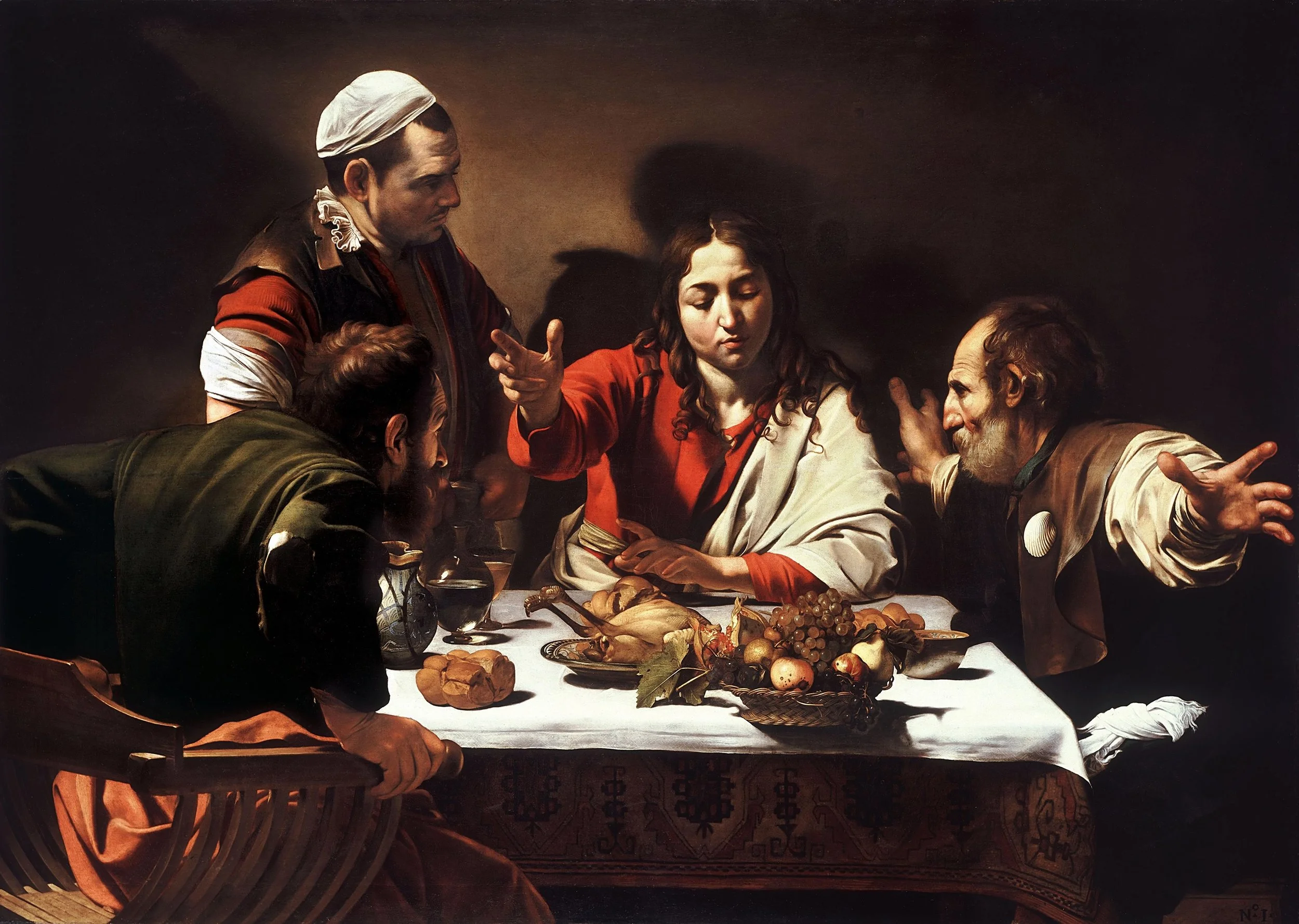
Luke 24:13-25
Now on that same day two of them were going to a village called Emmaus, about seven miles from Jerusalem, and talking with each other about all these things that had happened. While they were talking and discussing, Jesus himself came near and went with them, but their eyes were kept from recognizing him. And he said to them, “What are you discussing with each other while you walk along?” They stood still, looking sad. Then one of them, whose name was Cleopas, answered him, “Are you the only stranger in Jerusalem who does not know the things that have taken place there in these days?” He asked them, “What things?” They replied, “The things about Jesus of Nazareth, who was a prophet mighty in deed and word before God and all the people, and how our chief priests and leaders handed him over to be condemned to death and crucified him. But we had hoped that he was the one to redeem Israel. Yes, and besides all this, it is now the third day since these things took place. Moreover, some women of our group astounded us. They were at the tomb early this morning, and when they did not find his body there they came back and told us that they had indeed seen a vision of angels who said that he was alive. Some of those who were with us went to the tomb and found it just as the women had said, but they did not see him.” Then he said to them, “Oh, how foolish you are and how slow of heart to believe all that the prophets have declared! Was it not necessary that the Messiah should suffer these things and then enter into his glory?” Then beginning with Moses and all the prophets, he interpreted to them the things about himself in all the scriptures.
As they came near the village to which they were going, he walked ahead as if he were going on. But they urged him strongly, saying, “Stay with us, because it is almost evening and the day is now nearly over.” So he went in to stay with them. When he was at the table with them, he took bread, blessed and broke it, and gave it to them. Then their eyes were opened, and they recognized him, and he vanished from their sight. They said to each other, “Were not our hearts burning within us while he was talking to us on the road, while he was opening the scriptures to us?” That same hour they got up and returned to Jerusalem, and they found the eleven and their companions gathered together. They were saying, “The Lord has risen indeed, and he has appeared to Simon!” Then they told what had happened on the road and how he had been made known to them in the breaking of the bread.
There was a short article by M. Nolan Gray from the Atlantic from a couple years ago that’s really stuck with me. It was about something seemingly very simple, but I think the reasons for the subject of the article say a lot about our current society. The article is titled “Why Dining Rooms are Disappearing from American Homes.” The article was largely about housing shortages, zoning regulations, primarily in apartments, where large units that can accommodate a dining room are few and far between. In the article, one real estate developer is quoted as saying “For the most part, apartments are built for Netflix and chill.”
More people than ever eat their meals in front of ever-present screens whether they be the TV at dinner, the computer screen during work, scrolling emails over a quick breakfast. Surely this won’t come as a surprise to anyone here, anyone not living under a rock. But what does this mean for us, as a society, as a people? What does this mean for togetherness, for community? As Gray notes at the end of the article, “In an age when Americans are spending less and less time with one another, a table and some chairs could be just what we need.”[i]
This has been on my mind a lot lately, because even though I was able to take part in most of our lovely Lenten lunches, Lent is a busier season, not to mention February and March being pretty rough months up here in Vermont; my social life had really been lacking, so it hit extra hard last week when I had to not only miss Breakfast Church because of being sick, I had to miss my book club gathering later that evening. In my kind of depressed and nauseous state, I started furiously texting friends to see about getting together. It’s far too easy to just… not to that—to just not make the effort to get together, to just stay at home and entertain ourselves with screens and shows and videos. And the world around us seems to be conforming to that ease of isolation but getting rid of gathering spaces in our homes, getting rid of third spaces in our communities… at the risk of sounding dramatic, it’s a real tragedy.
And our reading for today shows how important it is to gather. It shows how important it is to show practice radical hospitality and to break bread together. We have the newly risen Jesus, appearing to two disciples, one named Cleopas, whom we never hear from again, and the other an unnamed companion. When Jesus comes upon them, approaches them, engages them in conversation, they do not recognize him. It’s written that “their eyes were kept from recognizing him,” implying that perhaps this is God’s doing, that there is some cryptic reason for their lack of recognition. But that’s just what this is—it’s an implication, it’s not fact. And this is not the only time Jesus isn’t recognized after his resurrection. Just two weeks ago on Easter Sunday, Jesus’ beloved friend Mary looks right at him and doesn’t recognize him until he speaks her name. In the strange and dreamlike final chapter of the gospel of John, Jesus sits on the beach grilling fish while his disciples come upon him, and they don’t recognize him. There is something different about Jesus when he is risen; or it is simply that his friends aren’t prepared, aren’t ready, simply aren’t expecting to see him again, in the flesh. In our passage today, even when Jesus essentially lectures these two disciples on the prophesies leading up to Jesus’ death, they don’t realize that it’s Jesus preaching to them. It is only when they sit down at a table with him, when they break bread with him, that they suddenly realize.
Of this specific moment, theologian Norman Wirzba, in his book A Theology of Eating, writes
Would it not make sense to think that the history of eating with Jesus, a history in which people learned to attend to each other and address each other’s needs, had so transformed their table manners that being around the Emmaus table gave them the space and the occasion they needed to recognize the unknown man and then see who was there? Eating together is so important because it gives us the opportunity to open ourselves more completely to the wonders of life and the world, wonders that often pass by unnoticed. In other words, if Jesus’ hospitality (if properly learned) had the effect of transforming people so that the confusion and terror they ordinarily felt could be converted into a welcoming and loving embrace that enabled them to see and know their guests and each other for who they more truly are. Eating was the place of recognition for the disciples because eating that is inspired and formed by Christ is about learning to commune with each other. It is about discovering the truth of the world, and then together developing the skills and habits people need in order to live with each other in modes of care, generosity, and peace. [ii]
The bread that Jesus broke was not magic. His appearance did not change when he sat at the Emmaus table. And yet, it was in this simple action of breaking bread that that he was suddenly known. It was in the revelatory act of hospitality that his friends snapped out of their despair and their confusion and realized who they had been talking to this whole time, realized who was truly with them, miraculously, in the flesh.
And it wasn’t just Jesus’ hospitality in breaking and blessing the bread that led to this moment. Cleopas and his friend encounter someone they think is a stranger. First, they are taken aback, confused, and in my reading, kind of irritated that this stranger doesn’t seem to know the horrific and wild events that had just taken place— the death of Jesus and rumors swirling around it: Are you the only stranger in Jerusalem who does not know the things that have taken place there in these days? they ask, dumbfounded; and then, this supposed stranger has the gall calls them foolishand slow of heart and proceeds to lecture them on all the things they’ve gotten wrong or haven’t understood—honestly, kind of rude! And yet, when they see him continuing to walk past Emmaus, rather than snickering to themselves, or saying good riddance, their response is, "Stay with us, because it is almost evening and the day is now nearly over."
As Wirzba says, “if properly learned,” the hospitality that Jesus teaches has the potential to be transformative. And clearly, in spite of some of their initial shortcomings regarding their understanding of the resurrection, Cleopas and his friend properly learned the hospitality their savior taught, and they were rewarded greatly. They saw him again. And they spread the Good News.
But we’re not learning this kind of hospitality anymore, we’re not learning this kind of openness. In fact, we’re often actively avoiding it— so much so, that many are turning to AI chatbots rather than true human friendships. In a recent article that explores phenomenon, the author writes,
Social chatbots provide the semblance of a kind of friendship that many people already want, or at least have gotten accustomed to: one that’s on demand, low effort, and completely personalized…AI friendship promises that you can receive the benefits of friends without needing other people… [it’s] all about you. And you don’t have to feel guilty about that, because the machine has no needs or feelings of its own.[iii]
It goes without saying, I think, that this interaction on the road to Emmaus, this revelation that this was, indeed Jesus, would never happen today in America. Chances are higher, I’m afraid, that it would end in insults or even violence, rather than a shared meal.
It’s in the friction and the mess that comes with breaking bread together, that comes with challenging each other, that comes with laughing and crying together, that leads to revelation. It’s being in community with each other and opening ourselves up to criticism, and questioning, but also to love and acceptance that lead to profound moments we cannot get in isolation, that we cannot get from the most technologically advanced machine.
Surely Cleopas and his companion were a little wary of this mysterious stranger on the road to Emmaus—this person who was apparently so oblivious to current events that he had no inkling of the horrific and miraculous things that had just occurred; this person who criticized and lectured them after his question was answered. And yet, something in Jesus’ teachings had obviously gotten through… because they invited this stranger to dine with them. They made sure he would not be alone and vulnerable in the dark in a deeply tumultuous time, in which people were walking around suspicious and fearful. They made sure this stranger had a place to eat.
In Kendall Vanderslice’s book We Will Feast, she writes,
…As Western Christianity moves into an increasingly individualized understanding of faith, we lose sight of ourselves as inherently communal. We lose sight of the long history of believers whose traditions we continue, and we forget the nuances of the story our meal of bread and wine must tell. If our churches do not know what happens when we eat together, how can we know what it means to be made one in the body and blood of Christ?[iv]
If we don’t make the effort to really sit around a table together, to converse and question, to really connect, are we really taking part in the sacraments? Are we really experiencing all there is to experience when we take part in the communion ritual?
Sometimes I wonder if I’m letting us off to easy in my sermons. For instance, I was originally going to say something to the effect of, now there’s nothing wrong with the way we take Communion on the first Sunday of every month. But I realized I cannot say this in good faith. Because I don’t know if this is true. Whether we’re standing in a line for intinction, or whether we’re passing out little pieces of bread and little shot glasses, we’re not taking the sacraments as Jesus and the earliest Christians did. It has more in common with the way Constantine introduced this sacred meal to the masses, when he “imperialized worship,” as Vanderslice says, “turning the service [and the meal] into an elaborate, pompous affair.”
The Church (and I mean capital-C Church, not us in particular) has strayed so far from what Jesus and his earliest followers intended. It’s strayed so far from the inclusive, simple, communal, quiet-yet-transformative faith it originally was. Meanwhile, as a society, we’ve strayed so far from the norm of looking out for our neighbors, from even engaging with them; we seem to be suspicious of anyone who disagrees with us, of anyone who makes us a little uncomfortable, anyone who challenges us, and it’s led to deep loneliness and isolation. As far back as Aristotle, it was believed that we humans are social creatures who need interaction and connection with one another to live good and fulfilling lives; Aristotle who says that “the outcast who is a lover of war…may be compared to a bird that flies alone.”
But there is good news. There is always good news. In our religious lives, we have the sacrament of communion to connect us, to bring us back to these sacred and profound meals that Jesus shared with his friends— and not just that somber and dramatic last supper; but also meals like the one we read about today, with Jesus and two friends… two despairing and confused friends who are suddenly awestruck by a miracle, their despair transformed into celebration. Jesus is always revealing something over a meal with his disciples, always revealing something over a meal with anyone who has a curiosity about the table. And each time we take Communion, even if we’re not always doing it quite the way Christ intended, we are invited back into that world— to those perfect moment of peace, of joy, of equality, around the table. What a gift.
And in our secular lives, inextricably linked with our faith lives, we can stop avoiding the mess—the mess of dirty dishes and spilled wine after guests leave, and the mess of differing opinions and slight discomfort… because it is only with those things—with the mess of crumbs and stained napkins, with the mess of friction and challenge, that joy and revelation can thrive. It is only with really and truly connecting with each other, with our fellow humans, that we can grow and learn and be sated.
Only then, in that intimate and intentional connection, will we truly be one with Christ and his way of life; and only then, will we truly recognize each other; and will we be strangers no more. Amen.
[i] https://www.theatlantic.com/ideas/archive/2024/06/dining-rooms-us-homes-apartments/678633/
[ii] Wirzba, Norman. 2007. Food and Faith: A Theology of Eating. Pg. 288
[iii] https://www.theatlantic.com/family/2026/03/ai-friendship-chatbot/
[iv] Vanderslice, Kendall. 2019. We Will Feast: Rethinking Dinner, Worship, and the Community of God. Pg. 42
