The Blessing of Falling
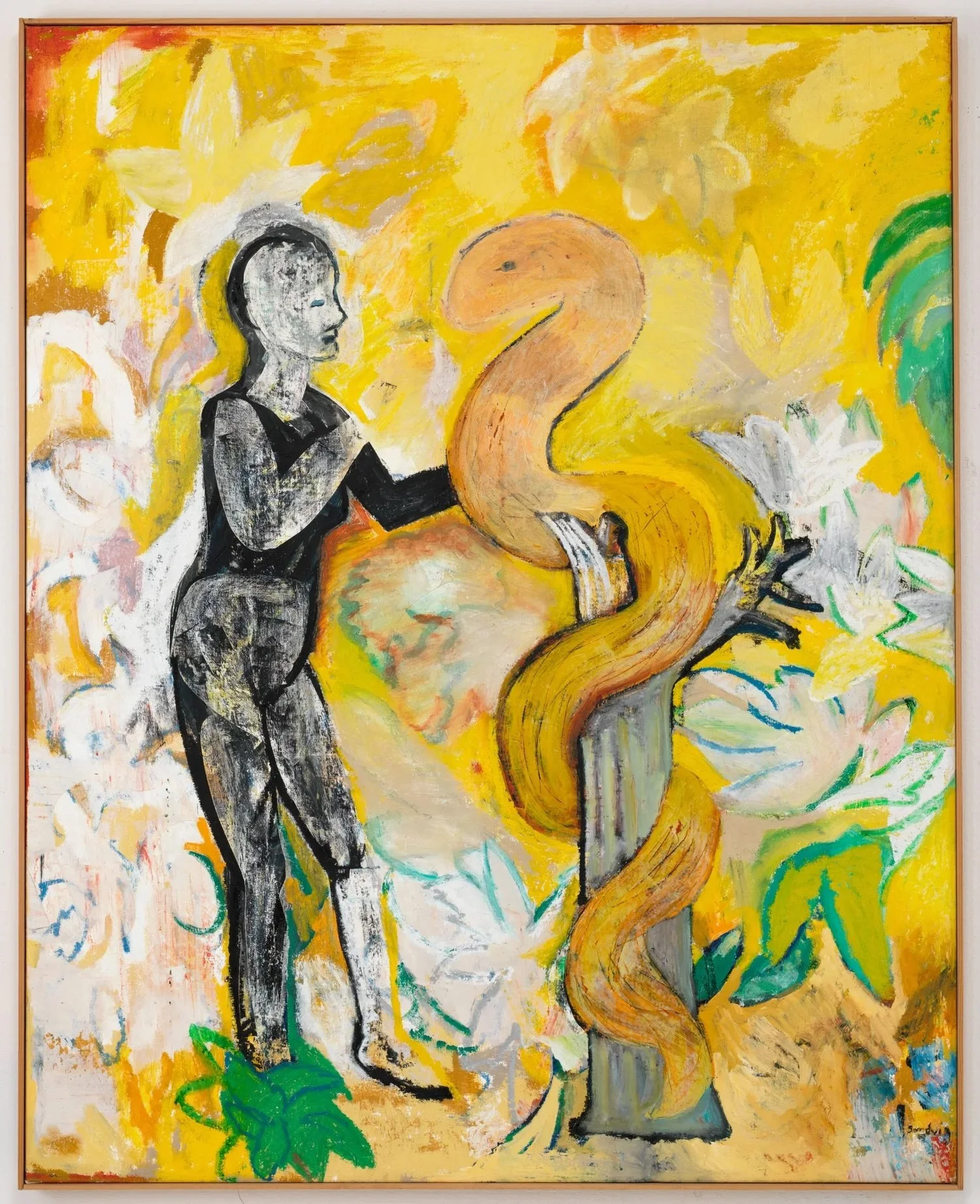
Genesis 2:15-17, 3:1-7
The Lord God took the man and put him in the garden of Eden to till it and keep it. And the Lord God commanded the man, “You may freely eat of every tree of the garden, but of the tree of the knowledge of good and evil you shall not eat, for in the day that you eat of it you shall die.”
Now the serpent was more crafty than any other wild animal that the Lord God had made. He said to the woman, “Did God say, ‘You shall not eat from any tree in the garden’?” The woman said to the serpent, “We may eat of the fruit of the trees in the garden, but God said, ‘You shall not eat of the fruit of the tree that is in the middle of the garden, nor shall you touch it, or you shall die.’ ” But the serpent said to the woman, “You will not die, for God knows that when you eat of it your eyes will be opened, and you will be like God, knowing good and evil.” So when the woman saw that the tree was good for food and that it was a delight to the eyes and that the tree was to be desired to make one wise, she took of its fruit and ate, and she also gave some to her husband, who was with her, and he ate. Then the eyes of both were opened, and they knew that they were naked, and they sewed fig leaves together and made loincloths for themselves.
There are so many directions we can go with this passage, this creation story. There’s of course the feminist reading—about Adam being this passive participant with Eve being, not so much a mastermind, rather than a deeply curious and wise being. There are of course the more philosophical arguments of free will, and how we deal with the responsibility, and really the burden, of this dangerous gift from God. There are the various interpretations and wonderings about what the fruit is—long shown in art to be an apple for no apparent reason; the question of whether the serpent is a devil or a demon, or simply a plot device in a strange story. There are just so many paths we could take in figuring out what this story can mean for us today, it’s overwhelming.
But we’ve entered into the season of Lent— a time of confession and discernment; a time of prayer and for some, a time deprivation and fasting. So in terms of this Lenten season, what does this passage about so-called original sin mean for us? What can we take from this sneaky talking serpent and this curious first woman?
There’s one very ambiguous and interesting part of our passage today that is worth looking into a little deeper for our Lenten purposes—it’s this idea of what death really means in this passage. God says very plainly of the tree of knowledge, “…in the day that you shall eat of it, you shall die.” Upon hearing this, it doesn’t seem that the two peaceful humans have any intent to challenge God on this command, until of course, the serpent appears. “You will not die,” the snake says, I imagine with a sly rolling of his eyes. Now—in theory, the snake is right. The two humans do not, in fact, die after they eat the forbidden fruit. And there’s just so much ambiguity here, because we could surmise that Adam and Eve were immortal until they ate of the fruit, but that’s never said explicitly at all. Death could also be something more figurative—a death of innocence, a death of this lush paradise. What is clear though, is humankind’s knowledge of death became real. And in humankind gaining the knowledge of life and death and all the dangerous and complicated things only God was supposed to know, our frightened mortal selves start selfishly striving for anyway we can survive, and soon, get ahead, anyway we can make sure we end up on top. With the shame and knowledge came fear of mortality, fear of what limited time we have on this earth.
And what have we done with this knowledge? Have we made sure that all people on this planet have comfortable and fulfilling lives, knowing how fleeting our lives are? Have we made sure we care for this planet so that all creatures, humankind and non-human animal alike can have lush, life-giving playgrounds to live and breathe freely? Have all of us who purport to call ourselves Christians thrown away the conveniences and temptations of our materialistic world to follow Christ’s sacrificial call? No. No, we most certainly have not. From our knowledge of life and death came fear. And this fear has driven most of humankind of think only of themselves. Just last week, I talked about Lauren Markham’s essay Immemorial—about how this “over focus of grief,” this fear of, in Markham’s case, the existential threat of climate change gets in the way of any positive future change because in the pit of despair, we focus only on what it means for me, what it means for the individual.
This fear, whether they will admit to it or not, I think, is what is driving so many of the richest and powerful to try to fight death by any means necessary—not by combating climate change or global poverty; but, rather, misguidedly, by figuring out how they, as individuals, can live as long as possible, at the expense of the rest of us. In fact, according to author Adam Becker in his book More Everything Forever, these billionaires are doing just that— they’re using this “overfocus on grief,” their fear, insidiously— by using apocalyptic language, they frame their research into colonizing space and lengthening life spans as something that needs to be done in order to allow the human race to continue. They’re justifying whatever wealth-hoarding they’re doing by claiming it’s for the greater good; you don’t have to be an astrophysicist, as the author Becker is, to see that their hubris when it comes to space travel and immortality is certainly not making life better for the normal person. Becker even refers to these ideas from tech barons as religious in nature. But rather than a theology based in love or compassion, a theology based in working from the bottom up to make sure every creature on this planet has the opportunity to live a good life, it is a “religion predicated on growth.” And any religion based in exponential growth is bound to fail. There are finite resources on this planet. And we, ourselves, are finite beings.
This past week, at our Ash Wednesday service, we talked a bit about what comes after the passage we read today—the punishment, in particular, the hard labor humankind would now be burdened with when it comes to making their food— God says that only by the sweat of their brow would Adam Eve be able to eat, after farming and harvesting and cooking. We talked about how this so-called curse can be reframed as something of a blessing— that in these days of lazy convenience, of having everything we’d ever need at our fingertips, we’ve lost the understanding, the creativity, the skill, in what it takes to really stop and make something like bread—to watch a sourdough starter come to life and ferment, to feel the soft flour and the rocky salt on our fingertips, to be forced to be patient and wait as the dough takes its precious time to rise before it’s ready to be gently shaped and then allowed to rest again, until finally are able to put it in the oven, and then smell those comforting smells and sustain our bodies with delicious bread made with love and patience.
This is a microcosm for living life in this broken world. It’s believed by some that the one thing that distinguishes humankind from non-human animals is that we can contemplate the future. It was believed by philosophers like Martin Heidegger that what truly distinguishes and differentiates humankind from any other species is that we understand, in some capacity that we are going to die one day; and when we accept that fact, this knowledge should positively shape everything we do in our lives. Every conversation we have, every step we take, every decision we make is because we have a concept of the future. We all know, if not how it will all end, that at some point it will indeed all end. And according to Heidegger, it is a good, and necessary that we act in the world with this knowledge always on our minds. And this goes even further to reinterpret this original sin, this fall in which Adam and Eve choose to disobey God by turning it into an existential, perpetual falling for each one of us—it changed the very essence of humanity by having us live our lives constantly falling, fighting temptations of hubris and power, of convenience and selfishness. And it’s living with this constant falling, as well as the knowledge and the acceptance of our mortality that allows us to embrace our own being, allows us to embrace this broken and beautiful world that God gifted us in spite of our constant stumbling.
The reality of our finitude is so terrifying and so mind-blowing that we have chapter 3 of our holy text in the book of Genesis giving us a creation story to better help to understand why we would be given this knowledge of mortality. Because wouldn’t life be is much better if we all lived in blissful ignorance? Wouldn’t life be so much easier if we went through life believing everything will go on forever, that we don’t have to care for the planet, or our bodies, or the lives of others? It’s such a difficult reality, in fact, that the creation story Tom read for us today presents this knowledge as a punishment for disobeying God God-self. But it doesn’t have to be.
Just as the art of baking bread from scratch can be a life-giving, fulfilling, even spiritual action as opposed to an inconvenience slog, so can taking the time to really try to understand life by living authentically— for us as Christians, that means accepting the short time God gifts us on this planet, and making the absolute most of it. It means following the call of Jesus to love our neighbor and work for a better world in this short time that we have. Christ and Heidegger alike, were they physically with us today, would surely be lambasting the tech bros trying to colonize Mars and live forever as living deeply inauthentic lives— lives striving to beat death, attempting to prove endless, exponential growth sapping all our resources is the answer. Those are the people in power now, both behind the scenes, and increasingly in the spotlight, and look where that’s gotten us—a burning planet and ever-growing inequality and inequity all because those in power are deeply frightened and wildly insecure about the fact of death—about the fact that we are mortal, fragile creatures.
As modern-day theologian Kate Bowler wrote in her Ash Wednesday reflection last week, “Ash Wednesday has never been subtle.” Remember from dust you came, and to dust you shall return. This is what kicks off the season of Lent. God really making it very clear that we are mortal, and that we need to confront and embrace it. Bowler goes on to write,
Lent doesn’t promise relief. It doesn’t offer a five-step plan for transcendence. It simply invites honesty. Forty days to stop pretending that we are fine, that we are in control, that we can outrun our limits with enough discipline or optimism.
We can’t live good, authentic lives, by being dishonest about what this life is— by pretending that if we desert this planet for space everything will be fine; by pretending if death isn’t a fact of life for each and every one of us; by pretending that those in power living deeply inauthentic lives full of fear will save us; by trying to be God. We live lives of authenticity by leaning into our mortality, by embracing it, and giving thanks for every joy, every sorrow, every surprise, every uncertainty of our brief lives. We live lives of authenticity by living as Jesus commands us to live— loving our neighbor as ourselves. Easier said than done, when we are constantly hyper-aware of our aging, hungry bodies, and frail bodies; easier said than done when we are striving to save some of this planet’s finite resources for ourselves. Easier said than done when the mess we’re in right now is very much in part because the powerful don’t want to accept that frailty, and we seem to be subject to their whims.
But— we who accept the frailty are the strong ones. We who find the blessings in the so-called curse are the strong ones. We who understand that our mortality means we have to support and uplift one another are the ones living authentic, and in our case, good Christian lives.
Lent has begun. And yes, we kick off Lent every year by thinking deeply about death. But this does not have to be depressing or morbid. In fact, it shouldn’t be. Solemn and serious, sure— when the first people ate of that forbidden fruit, their eyes were opened. Our eyes are opened—not just to mortality, but also to everything that makes our brief lives worth living. Our eyes are opened to the beauty of God’s world, and the glimpses of heaven on earth we are gifted with throughout our lives. Our eyes are opened to the fact that every single one of us on God’s earth are facing the same end. And that bonds us. That makes us one marching towards certain death. But as a Lenten people, as a Christian people, it makes us one marching towards another one of those divine contradictions—that as we accept and embrace that we are marching towards death, we discover that we are also marching towards resurrection. But to once again quote Kate Bowler, “Yes, Easter is coming—but that is not Lent’s work. Lent refuses the shortcut.”
So this Lent, and beyond— slow down. Bake bread from scratch. Spend some of your precious time on this planet by taking the long, inconvenient way. Live your lives by helping to improve the lives of others, knowing we all meet the same end. Embrace this end, and live joyfully in it. Amen.
